§ A Fair With a Mandate
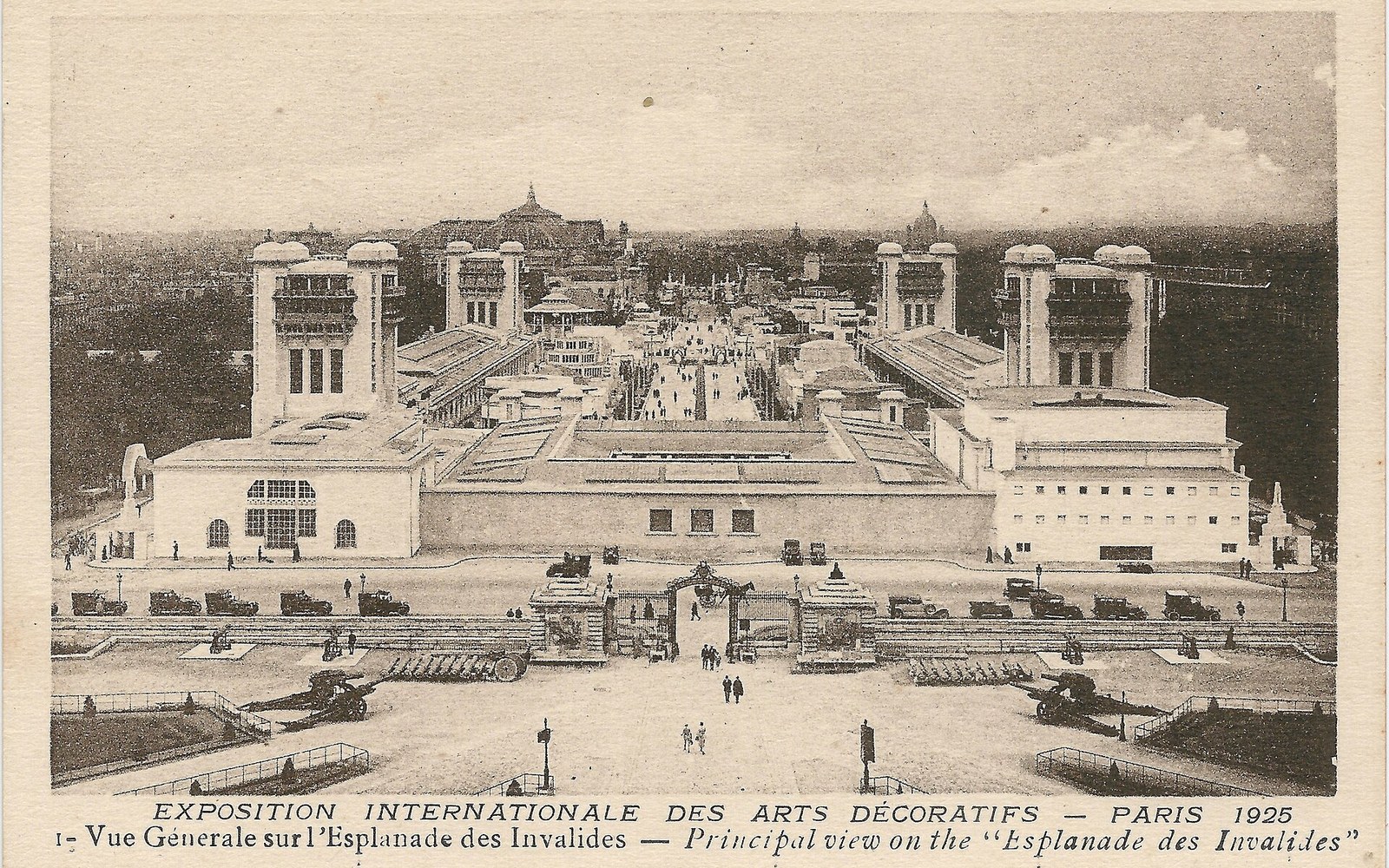
The Exposition internationale des Arts Décoratifs et Industriels Modernes opened in Paris on 28 April 1925 and ran until 25 October. Its brief was precise: no historical reproductions, nothing derivative. Exhibitors were required to show work that was genuinely modern. The result was a roughly twenty-three-hectare site straddling the Seine, occupying the Esplanade des Invalides, the banks on both sides and stretching through the Grand Palais, whose nave was given over to applied arts displays. The Pont Alexandre III, still dressed in its 1900 ironwork, served as a ceremonial axis between pavilions that competed to outdo one another in lacquered surfaces, stylised ornament and geometric relief.
France had proposed the fair as early as 1907, and a 1912 date had been set before the war intervened. By the time it opened, the built-up pressure produced something close to an overstatement: twenty-one nations participating, more than fifteen thousand exhibitors, and a cumulative attendance that the organisers placed at around sixteen million visits across the six-month run. The dominant visual register was the one posterity labelled Art Deco — a name not coined until decades later, retrospectively applied to the decorative language on display: stepped forms, sunburst motifs, rich materials, disciplined symmetry. The style was not a programme so much as a convergence, and the fair crystallised it for international audiences.
The pavilions of the great Parisian couture houses and the Hôtel du Collectionneur by Jacques-Émile Ruhlmann became the fair's emblematic presences. Ruhlmann's installation, arranged as a fictional collector's mansion, set the tone for what the committee had in mind: luxury craft elevated to the level of fine art, modern in feeling if not in structure. René Lalique contributed glasswork; the Sèvres manufactory displayed ceramics; and the Soviet Union, one of the more unexpected participants, sent constructivist work that jarred pleasantly against its neighbours.
Chronology
From the record- 1907fair first proposed by French trade and arts bodies
- 1912original planned date, cancelled by the war
- 28 April 1925exposition opens
- 25 October 1925exposition closes
- 1966Musée des Arts Décoratifs retrospective exhibition crystallises the label "Art Deco"
- early 1970sterm enters widespread English-language use
§ The Fence and What It Hid
Le Corbusier and Pierre Jeanneret submitted their Pavillon de l'Esprit Nouveau to the fair's committee under the banner of the journal L'Esprit Nouveau, which they had co-founded. The pavilion was a full-scale prototype dwelling unit: unornamented white walls, a double-height living space, mass-produced Thonet furniture, and a diorama proposing the demolition of central Paris north of the Seine and its replacement with cruciform towers. It was, by any measure, the exhibit least sympathetic to what the fair had set out to celebrate.
The organising committee's initial response was to deny the pavilion a site. When a position was eventually granted, a two-metre fence was erected around it — ostensibly on grounds of construction scheduling, in practice a means of keeping the building out of the fair's visual field for as long as possible. Minister of Fine Arts Anatole de Monzie intervened to have the fence removed, and the pavilion was finally accessible to visitors for the latter portion of the fair's run. It attracted attention disproportionate to its modest footprint. The separation between the two visions — the lacquered cabinet-making of Ruhlmann and the stripped prototype apartment of Le Corbusier — was not a tension the fair could resolve. It simply displayed both, on the same ground, in the same season.
§ What the Name Came to Cover
The retrospective label Art Deco was popularised particularly through a 1966 exhibition at the Musée des Arts Décoratifs in Paris that revisited the 1925 fair; the term entered widespread English use from the early 1970s. What it designated was the dominant mode of the fair's mainstream: the pavilions, the glassware, the metalwork, the furniture veneered in exotic timbers. Le Corbusier's contribution fell entirely outside that category, which is part of why the fence around it has remained so discussed. The Salon de l'Automobile and other interwar trade events would carry Art Deco idiom into product design through the following decade; the 1925 fair was where the idiom was assembled, named by implication and photographed for export.
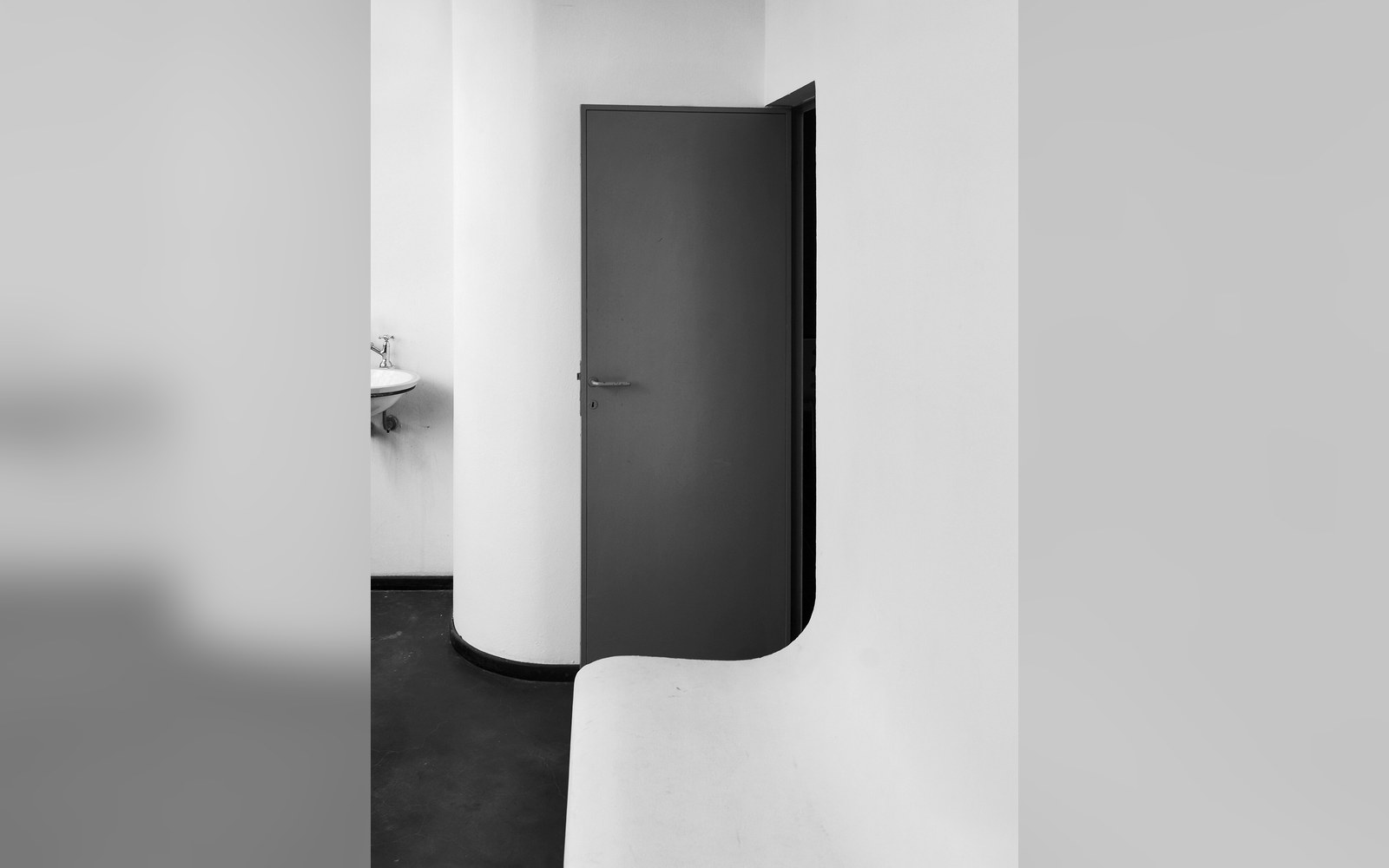
The exposition had aimed to demonstrate that French decorative industry led the world. In that commercial sense it succeeded. What it could not manage was to prevent the building it fenced off from becoming, in retrospect, the exhibit most written about.
 Plate 02