§ The Aircraft and the Occasion
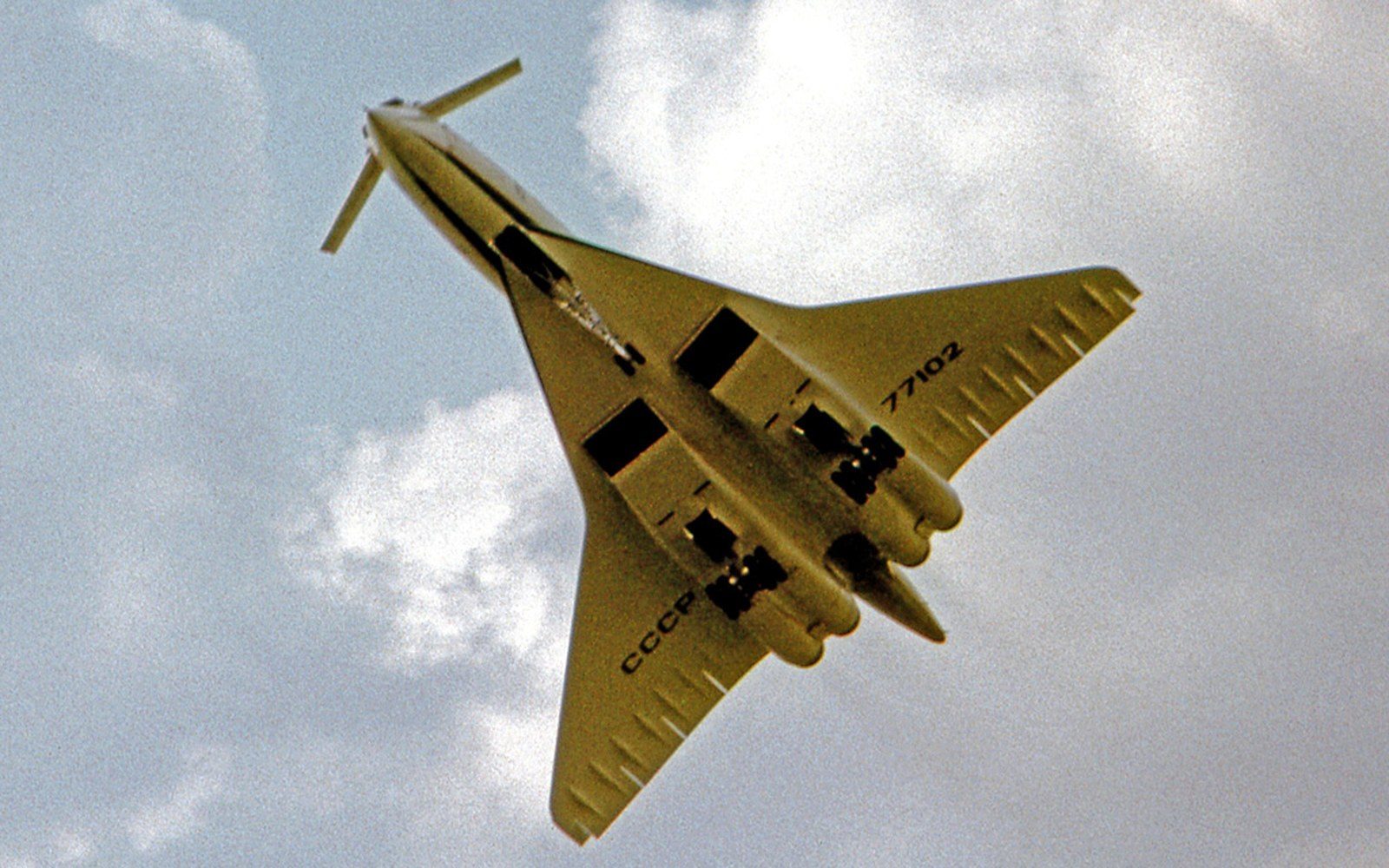
The Tupolev Tu-144 — NATO reporting name "Charger" — was the Soviet Union's answer to Concorde, and its presence at the 1973 Paris Air Show carried obvious political weight. The aircraft had made its first flight in December 1968, beating Concorde into the air by two months, and its appearance at Le Bourget was intended to demonstrate Soviet parity in supersonic civil aviation. The Tu-144 was scheduled for a flying display on 3 June 1973, the final day of the show.
The aircraft that flew that afternoon was construction number 77102, the second pre-production machine. Concorde had already completed its own display earlier in the session. The Tu-144 made several passes over the airfield before entering the sequence that led to the accident.
§ The Sequence and the Outcome
During a low-altitude manoeuvre — the aircraft had descended steeply and appeared to be attempting a nose-up recovery — the Tu-144 broke apart in the air over the village of Goussainville, roughly six kilometres from the Le Bourget threshold. The French investigation concluded that structural failure occurred at an altitude of around 1,200 metres, following aerodynamic overload during the pull-out. All six crew members aboard were killed. Wreckage fell across a residential area of Goussainville; eight people on the ground died and a further twenty-five were injured. Fifteen houses were destroyed.
Chronology
From the record- December 1968Tu-144 first flight, two months ahead of Concorde
- 3 June 1973crash during Paris Air Show flying display; 6 crew and 8 ground fatalities
- Post-1973progressive tightening of display-geometry rules at Le Bourget and European shows
The French investigation, led by the Bureau Enquêtes-Accidents, produced findings that were contested by Soviet authorities; full agreement on the causal sequence was never reached. Speculation in the years following the accident included the presence of a French chase aircraft and possible interference with the cockpit crew's attention, but no definitive cause was established in the public record.
§ Le Bourget's Format Under Examination
The 1973 accident forced an immediate and lasting reassessment of how close-in public flying displays were conducted over populated areas adjacent to Le Bourget. The Paris Air Show, which had grown from its 1909 origins at the Grand Palais into the world's largest aerospace trade event, had always traded on the visceral proximity of aircraft to spectators. After 1973, display geometry — minimum altitudes, pull-out distances and overflight zones — was progressively tightened at Le Bourget and, by extension, at comparable shows across Europe. The event continued, but the proposition that a flying display's drama was inseparable from its proximity to crowds was, from that afternoon, permanently qualified.