§ What the Stand Showed
Citroën chose the opening morning of the forty-second Salon de l'Automobile to present the DS 19 to a paying public rather than release it through a controlled press event. The decision was deliberate: the Grand Palais's great nave, lit by its iron-and-glass vault, gave the car a setting no press garage could match, and the crowd pressure of opening day would itself become part of the record.
The stand placed a single DS on a low plinth at its centre, with cutaway diagrams and cross-section models arranged to explain the hydropneumatic suspension — the system that most visibly separated the DS from anything else in the hall. Hydropneumatic suspension replaced conventional steel springs with nitrogen-filled spheres and hydraulic fluid, allowing the car to rise and settle on command, to maintain a constant ride height regardless of load, and to lower itself for servicing. Citroën's stand staff demonstrated the self-levelling cycle repeatedly through the morning, raising and lowering the car in front of visitors who had queued from before the doors opened.
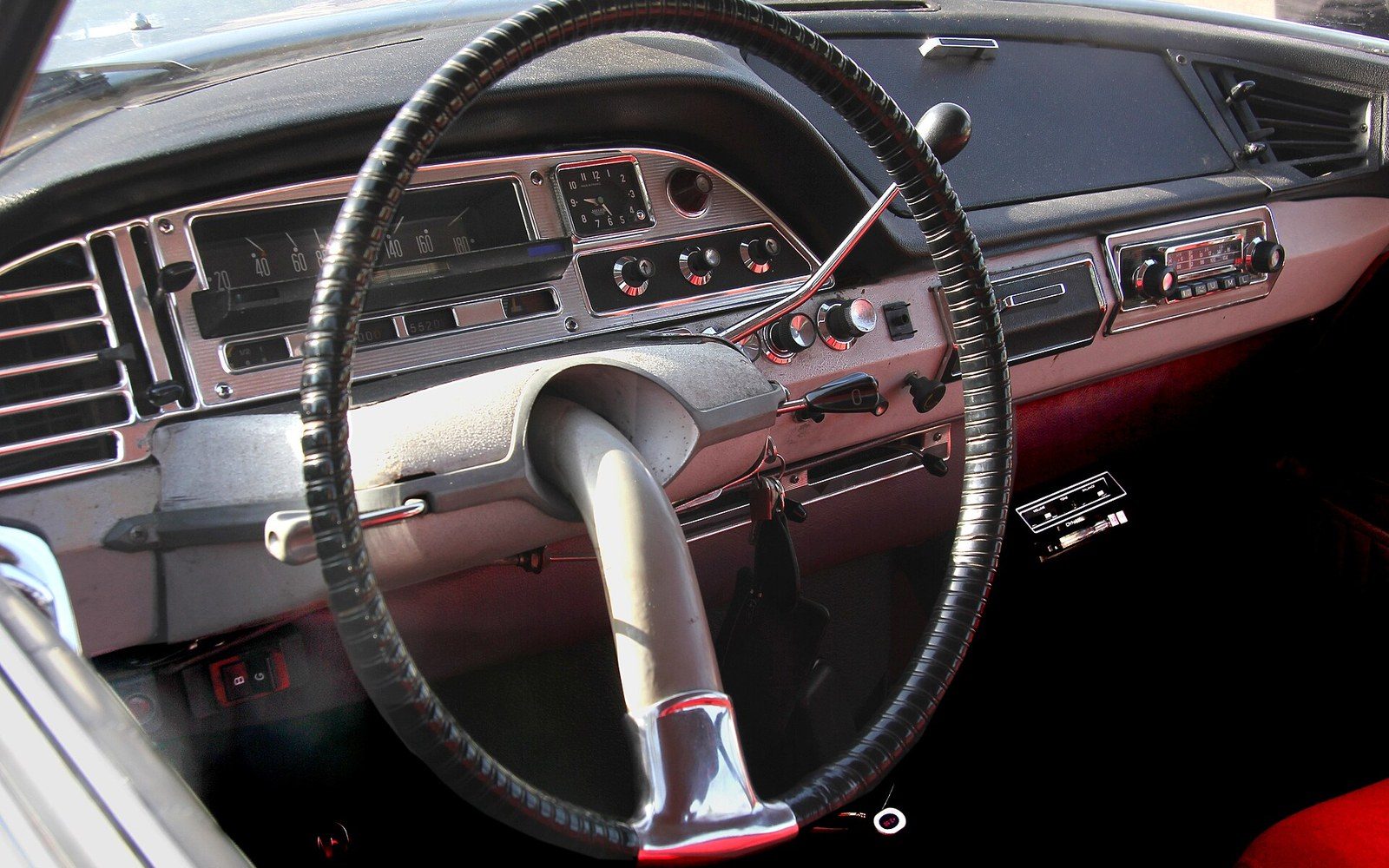
The body itself reinforced the spectacle. Flaminio Bertoni's exterior, with its tapering tail, recessed rear wheels and flush-bonded windscreen, looked unlike any production car then in manufacture. The pressed-steel roof was a separate panel bonded to the body rather than a structural element — a detail the stand models made legible. Inside, a single-spoke steering wheel and dashboard instruments gathered into a central binnacle announced that the interior had been reconsidered on the same terms as the chassis.
Key figures
From the record- 749orders recorded by Citroën stand staff before noon on 5 October 1955
- 12,000total orders by close of the first public day
- ~80,000total orders attributed to the Paris Salon run
- 1956 (summer)earliest French delivery date for the DS 19
- 1975year DS production ended, twenty years after the stand debut
§ The Order Figures
The numbers taken by Citroën's stand staff that morning entered the record almost immediately. By noon on 5 October 1955, 749 orders had been placed; by the close of the first day, the figure stood at 12,000. The total across the Salon's run reached approximately 80,000 orders, a figure Citroën's own documentation attributes to the Paris showing. No previous car at the Salon had attracted order volumes on that scale within a single event.
Citroën's logistical problem was consequential: Citroën's Quai de Javel plant could not begin delivering the DS 19 to French buyers until the summer of 1956, and export deliveries ran later still. The order book created at the Grand Palais committed the company to a production ramp it had not fully anticipated at the moment the stand opened.
§ The Salon as Launch Platform
The 1955 Salon illustrates why the Paris show functioned as an actual commercial event rather than simply a display occasion. Orders taken on the floor carried deposits; they were binding commitments recorded by the concessionaire staff stationed alongside the design representatives. The Salon de l'Automobile, held from 1898, had developed this dual character — press preview followed by public opening — precisely because the Chambre de Commerce and the constructor networks treated the stand debut as the effective product release.

For the DS, the press preview the day before the public opening had already produced substantial coverage, but the order figures that entered the historical record came from the public day. Roland Barthes, writing in Mythologies, described the DS as though it had descended from another era — he used the word "superlative" — but his observation was shaped by the same Grand Palais encounter that the paying visitors had. The stand debut was the launch; everything else was documentation of it.
The DS remained in production until 1975, a twenty-year run whose commercial foundation was laid in a single morning at the Grand Palais in October 1955.
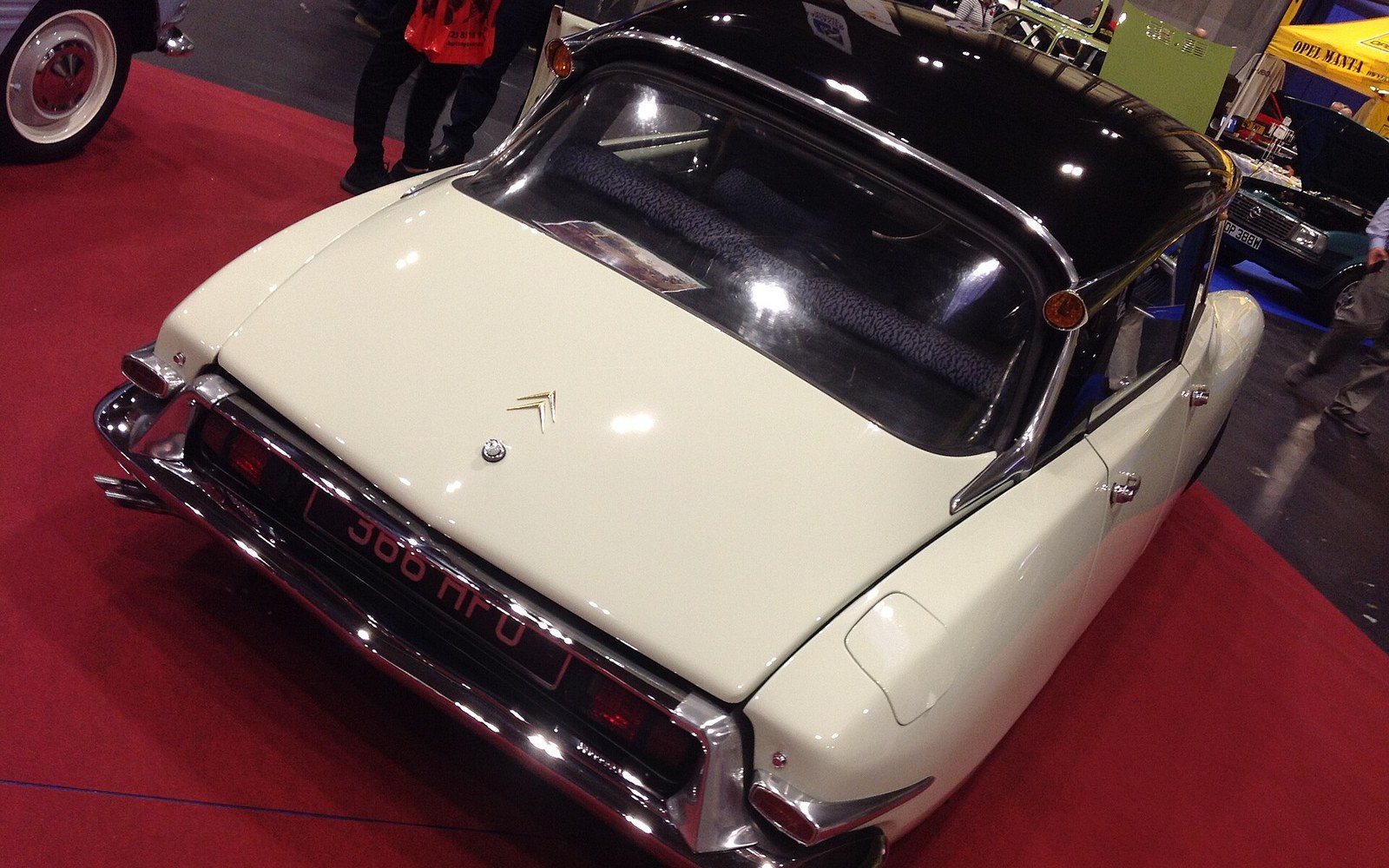 Plate 02