§ From the Invalides to the Porte de Versailles
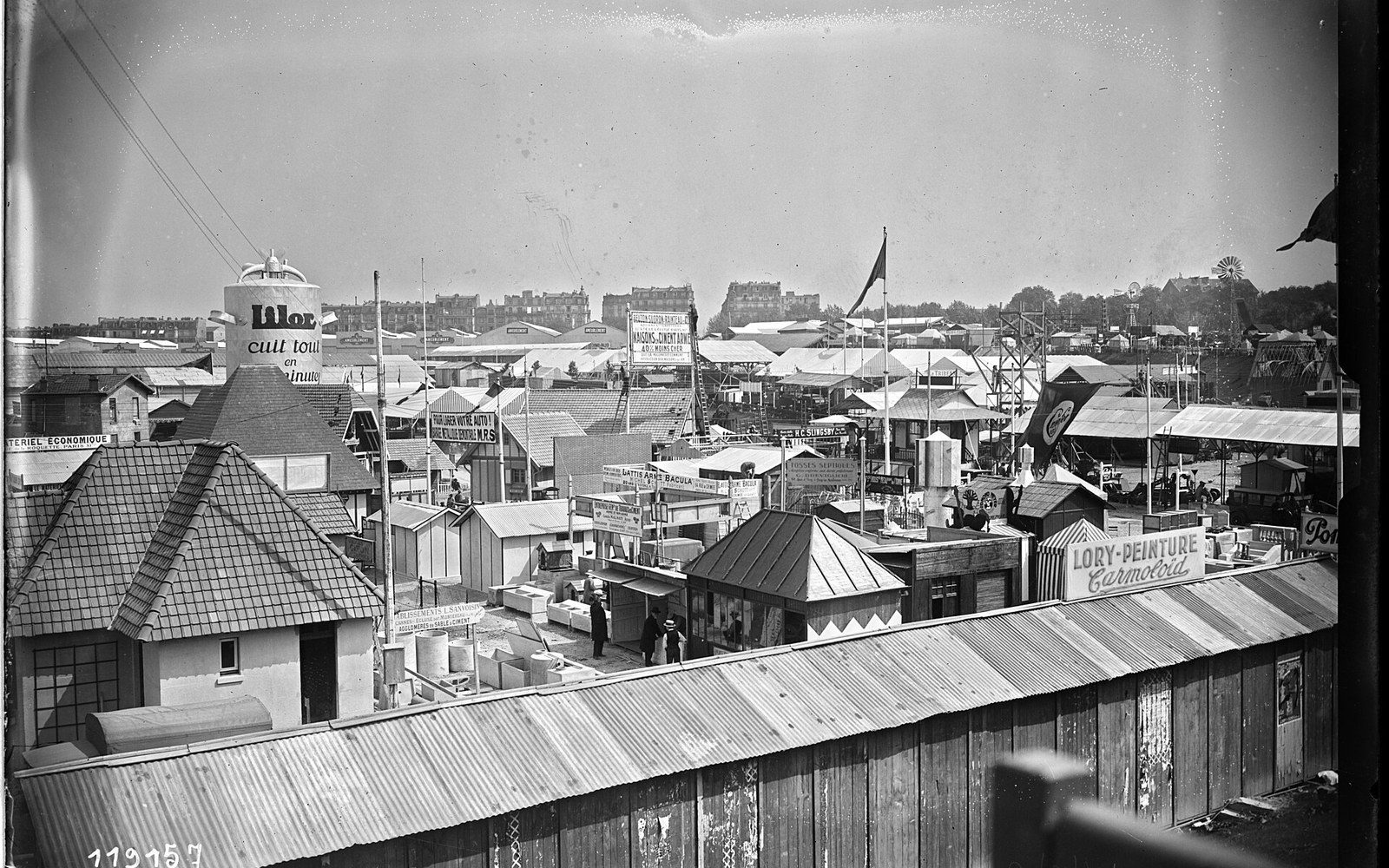
The Foire de Paris opened in 1904 on the esplanade of the Invalides, a sprawl of temporary pavilions selling household goods, kitchen equipment, furniture and novelties to a Parisian public that had just seen two world expositions in fifteen years. It was never a trade fair in the strict sense — no press days, no restricted entry, no sector focus. From the first edition it was aimed at the ordinary consumer, offering manufacturers a direct route to buyers who might not enter a department store but would happily cross a fairground.
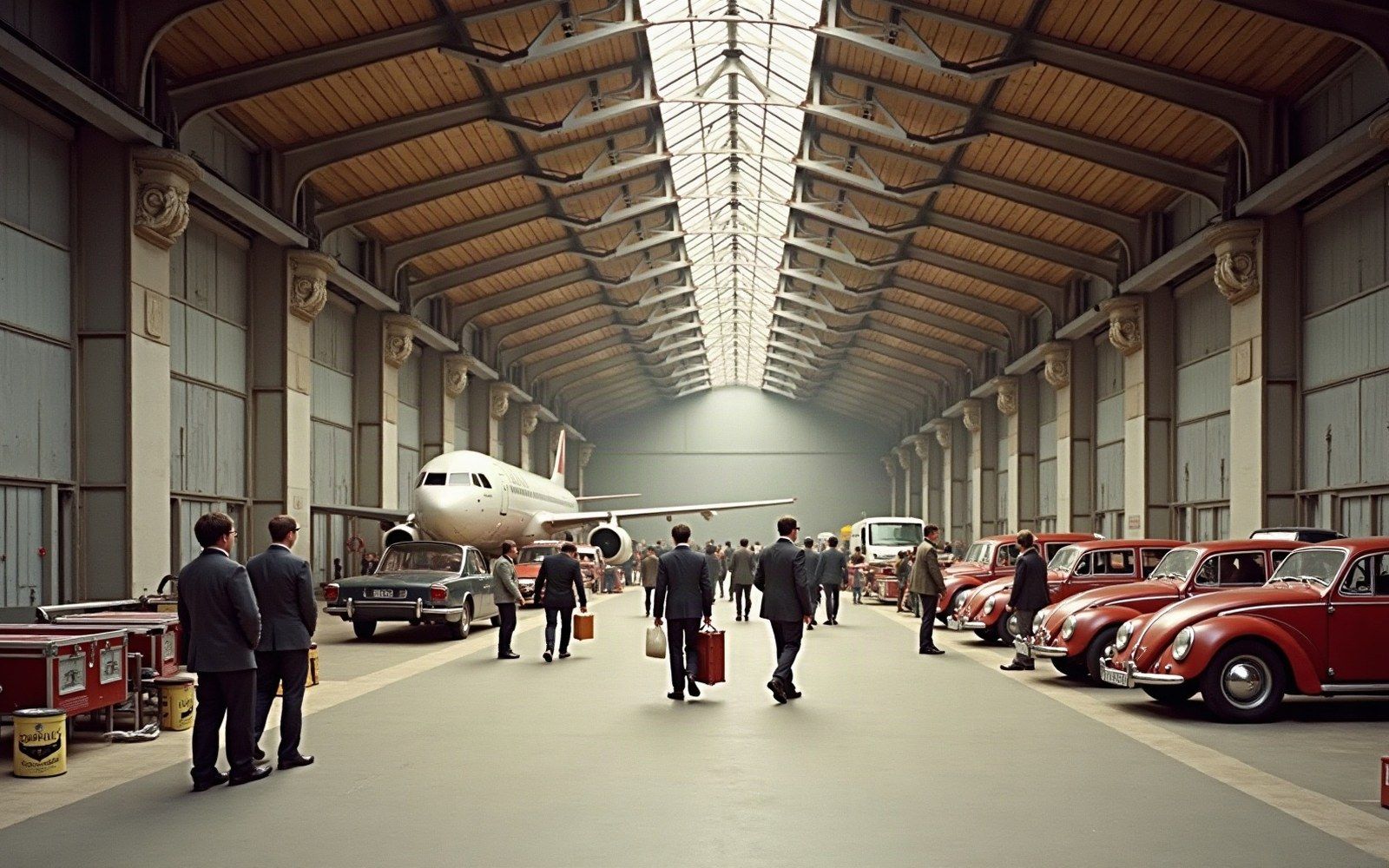
The fair moved between Paris sites in its early decades before settling, in the interwar period, at the Porte de Versailles, the purpose-built exhibition ground in the 15th arrondissement whose first permanent halls rose in the late 1920s. The Porte de Versailles site was conceived from the outset as a multi-use ground capable of hosting both the Foire de Paris and the specialist salons — the motor show, the agricultural fair, the boat show — that were already differentiating themselves by product category and audience. The Foire de Paris occupied the site every spring, typically in late April and May, and became in effect the Porte de Versailles's anchor tenant.
§ What the Foire Kept That the Salons Shed
As French exhibition culture professionalised through the twentieth century, the specialist salons captured the industry attention and the press coverage. The Salon de l'Automobile drew manufacturers and journalists; the Salon International de l'Agriculture drew ministry officials and livestock breeders. The Foire de Paris drew families. That distinction, often treated as a weakness, proved structural. A general fair addressed no single industry and therefore suffered no single industry's downturns. When specialist sectors moved toward trade-only formats or shifted to dedicated venues — the Paris Air Show to Le Bourget, viniculture to Bordeaux — the Foire de Paris retained its generalist, public-admission model and its spring slot.
Chronology
From the record| 1904 | first edition, held at the esplanade des Invalides |
| Late 1920s | Porte de Versailles permanent halls constructed; Foire de Paris relocates |
| Spring slot (typically late April–May) | the fair's recurring annual position at Porte de Versailles |
The fair's exhibitor mix at any given moment reflected French domestic consumption rather than any one manufacturing sector: white goods, home improvement materials, regional food producers, travel services, emerging electronics. It registered Bureau International des Expositions attention only in the negative sense — it was never classified as a world exposition, never sought the designation, and needed no international treaty to operate. The Chambre de Commerce de Paris and the Comité des Expositions de Paris administered the successive editions without the regulatory architecture that governed the Expositions Universelles.
By the early twenty-first century the Foire de Paris remained one of the largest public consumer fairs in Europe, measured by the Porte de Versailles's own attendance records — a general fair that survived precisely because it never became anything more specific.